Call: 08071931611
 Send Inquiry
 Send Inquiry
Industrial Air Washer Unit
Price 12-20 INR/ Cubic Foot
MOQ : 1 Cubic Foot
Industrial Air Washer Unit Specification
- Humidity %
- 60 to 90%
- Pressure Range
- 10 - 60 mm WG
- Connectivity Type
- Stand-Alone
- Dust
- Low Dust Emission
- Ventilation
- Ducted or Non-Ducted
- Equipment Type
- Industrial Air Washer Unit
- Dust %
- <2%
- Output
- Clean & Cool Air
- Hole Size
- Custom As Per Design
- Maintenance Type
- Easy Maintenance
- Energy Consumption
- Low
- Control System
- Digital Controller (Optional)
- Application
- Textile Industry, Pharmaceuticals, Commercial Buildings, Engineering Units
- Flow Rate
- 5000 to 60000 m/hr
- Features
- Corrosion Resistant, Low Maintenance, High Durability
- Frequency
- 50/60 Hz
- Material
- Galvanized Steel / Stainless Steel
- Efficiency (%)
- 85 - 94%
- Filtration Property
- 2 / 3 Stage Filtration
- Noise Level
- Below 75 dB
- Installation Type
- Floor Mounted
- Filters
- High Efficiency Pre Filters and Cellulose Paper Filters
- Color
- Sky Blue / Custom
- Automatic Grade
- Semi Automatic
- Capacity
- 5000 - 60000 CFM
- Power
- 3 - 15 HP
- Voltage
- 380-440 V, 3 Phase
- Dimension (L*W*H)
- Customizable as per requirement
- Weight
- Range: 350 - 1200 kg
- Safety Features
- Overload Protector, Water Level Sensor
- Tank Capacity
- 120 - 1000 Litres
- Water Distribution
- Uniform Top Sprinkler
- Number of Filters
- 2 to 4
- Fan Speed
- 1440 RPM
- Body Finish
- Powder Coated
- Pad Material
- Cellulose/ Synthetic Fiber
- Usability
- Continuous Operation
- Pump Type
- Submersible Water Pump
- Ambient Temperature Range
- 5°C to 55°C
- Blower Type
- Centrifugal / Axial Blower
- Drain System
- Automatic / Manual Drain Valve
Industrial Air Washer Unit Trade Information
- Minimum Order Quantity
- 1 Cubic Foot
- Supply Ability
- 10 Cubic Feet Per Month
- Delivery Time
- 1 Week
About Industrial Air Washer Unit
The Industrial Air Washer Unit that proposed by us is engineered to be utilized to clean and cool the moist & hot air that enters into this unit to a level where there it meets dew point whenever come in contact with cold water. This type of system helps in reducing the moisture content of air and making it fresh. Suitable for hospitals, hotels, restaurants, shopping malls, etc., Industrial Air Washer Unit is easy to install, high performance, low maintenance, and comes in varied models, sizes, and specifications.
Advanced & Customizable Air Cooling
Our Air Washer Units offer multiple blower types, customizable tank capacities, and optional digital controller, allowing precise matching to varied industrial requirements. With a capacity spanning from 5000 to 60000 CFM and a flow rate up to 60000 m/hr, these units are highly adaptable for both small and large spaces, ensuring optimal ventilation and air quality.
Robust Design with User-Friendly Operation
Engineered with galvanized or stainless steel and finished with durable powder coating, these units withstand harsh industrial conditions. Features like centrifugal or axial blowers, reliable overload protection, and submersible water pumps help support uninterrupted operation. Easy maintenance and energy efficiency keep downtime and running costs to a minimum.
Efficient Air Filtration & Humidification
Utilizing multi-stage filtrationincluding high efficiency pre-filters and cellulose paper elementsthese air washers effectively trap dust, providing an output with less than 2% dust content and humidity regulation from 60% to 90%. The uniform top sprinkler ensures thorough water distribution, optimizing cooling and filtration results every time.
FAQs of Industrial Air Washer Unit:
Q: How does the Industrial Air Washer Unit guarantee clean and cool air?
A: The unit employs a multi-stage filtration system, including high efficiency pre-filters and cellulose or synthetic fiber pads, alongside uniform water distribution via a top sprinkler. This setup ensures airborne contaminants and dust are effectively removed, delivering consistently clean and cool output.Q: What maintenance procedures are recommended for this air washer system?
A: Routine checks should include cleaning or replacing the filter pads, inspecting the water distribution system, and ensuring the submersible pump operates efficiently. Both automatic and manual drain valves assist in efficient water management, and overload protectors safeguard components against prolonged use.Q: Where can this air washer unit be installed and what are its typical applications?
A: The unit is floor-mounted and suitable for diverse environments, such as textile factories, pharmaceutical plants, engineering facilities, and commercial buildings. Its also adaptable for custom installations thanks to its customizable size and finish options.Q: When is it most advantageous to use a centrifugal or axial blower in the air washer?
A: Centrifugal blowers are preferred in applications requiring higher pressure and ducted systems, whereas axial blowers are efficient for high airflow and open ventilation. The choice depends on your facilitys layout and desired air distribution.Q: What benefits does the automatic/manual drain system provide?
A: The automatic drain option simplifies maintenance by periodically flushing the system without manual intervention, preventing sediment build-up. Manual drainage allows targeted cleaning, giving operators more control depending on operating requirements.Q: How does the air washer support continuous operation during variable ambient conditions?
A: With operational support for temperatures ranging from 5C to 55C and features such as an overload protector, water level sensor, and durable construction, the unit is built for reliable year-round use, regardless of environmental fluctuations.Q: What energy-efficiency and safety features are included in this unit?
A: The air washer is designed for low power consumption, incorporates overload protection for electrical components, uses a submersible pump to optimize water circulation, and provides water level sensing to avoid dry runsensuring both user safety and reduced operational costs.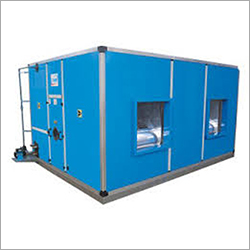
Tell us about your requirement

Price:
Quantity
Select Unit
- 50
- 100
- 200
- 250
- 500
- 1000+
Additional detail
Mobile number
Email

More Products in Air Washer Unit Category
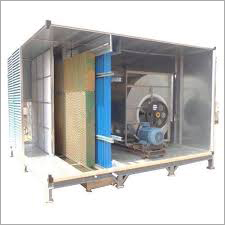
Air Washer Vertical Unit
Price 12-20 INR / Cubic Foot
Minimum Order Quantity : 1 Cubic Foot
Weight : Varies with model (Approx. 350900 kg)
Voltage : 220/380 V
Control System : Other, PLC/Automatic control panel
Energy Consumption : Low to moderate depending on usage
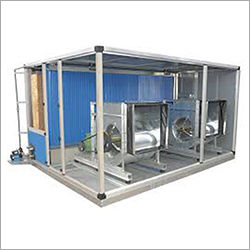
Mild Steel Air Washer Unit
Price 12-20 INR / Cubic Foot
Minimum Order Quantity : 1 Cubic Foot
Weight : 4501200 kg
Voltage : 220415 V
Control System : Other, Electrical Control Panel
Energy Consumption : Low

Contact Details
YASHICA ENGINEERING
GST : 07BACPD6288G1ZP
- Plot No. 238F, Bhagwati Garden Ext., 55 Feet Road, Near Dixit Properties, New Delhi - 110059, India
- Phone :08071931611
 Send Inquiry
|


Developed and Managed by Infocom Network Private Limited.


